
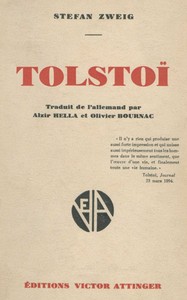
Tolstoï by Stefan Zweig
Stefan Zweig's 'Tolstoï' is a biography that reads like a psychological thriller. It zeroes in on the central, explosive conflict of Leo Tolstoy's life: the war between the man and the legend, the artist and the prophet.
The Story
Zweig skips the usual cradle-to-grave timeline. Instead, he paints Tolstoy as a man split down the middle. For the first fifty years, we see the Count: a giant of literature, a husband, a landowner. Then, a profound spiritual crisis hits. Tolstoy becomes disgusted with his privilege, his fame, and the very novels that made him famous. He decides to live by the purest principles of Christian poverty and non-violence.
The rest of the book charts the heartbreaking fallout. We see him trying to give away his wealth and copyrights, which his wife Sofya fights to keep for their family. We watch his followers flock to him, treating him as a saint, while he feels like a hypocrite for still living in a manor house. Zweig masterfully builds the tension until the final, dramatic act: the 82-year-old Tolstoy's secret midnight flight from his home, seeking a humble death, only to die in the stationmaster's house at a remote train depot. It's an ending that feels both tragic and strangely fitting.
Why You Should Read It
This book sticks with you because it’s about more than Tolstoy. It’s about the agony of an ideal. Zweig makes you understand both sides—you feel for Sofya, desperately trying to hold her world together, and you feel Tolstoy's torment at living a life he believed was false. It asks huge questions: Can we ever fully live up to our own beliefs? What does a moral life actually cost? The writing is electric. Zweig doesn't describe Tolstoy's thoughts; he takes you inside them. You get the sense that Zweig, an intellectual himself, is both in awe of and baffled by Tolstoy's radical choice. It’s this personal, invested perspective that makes the book so compelling.
Final Verdict
Perfect for anyone who loves a deep character study, whether you've read 'Anna Karenina' or not. If you're interested in the messy, human side of genius, this is a masterpiece. It’s also a great pick for readers who think biographies are boring—Zweig proves they can be as tense and moving as any novel. Just be warned: you might finish it and stare at the wall for a while, thinking about your own contradictions.
This publication is available for unrestricted use. Distribute this work to help spread literacy.
Nancy Lee
1 year agoThanks for the recommendation.
Carol Nguyen
1 year agoVery interesting perspective.
Edward Sanchez
8 months agoRead this on my tablet, looks great.
James Jones
1 year agoI came across this while browsing and the depth of research presented here is truly commendable. Exceeded all my expectations.