
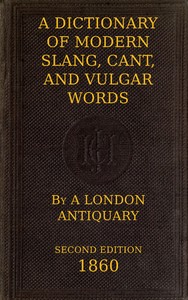
A Dictionary of Slang, Cant, and Vulgar Words by John Camden Hotten
Forget everything you know about stuffy Victorian reference books. A Dictionary of Slang, Cant, and Vulgar Words is something else entirely. Published in 1859 by John Camden Hotten, this isn't an official record of the King's English. It's a messy, vibrant, and often rude collection of the language that real people used when no one 'proper' was listening.
The Story
There's no plot in the traditional sense. Instead, the 'story' is Hotten's project itself. He acted like a linguistic detective, gathering words from the margins of society. He tracked down the secret language ('cant') used by thieves and beggars to avoid police. He wrote down the crude, funny, and descriptive slang from sailors, soldiers, and street vendors. He even included those blunt, 'vulgar' words for body parts and sex that were absolutely forbidden in polite conversation. The book is organized like a dictionary, but each entry tells a tiny story. You learn that 'blow the gaff' meant to reveal a secret, 'daddy-long-legs' was slang for a fancy, spindly coach, and 'mort' was a cant word for a woman. It's a raw, alphabetical snapshot of a world that official history books tried to clean up.
Why You Should Read It
I love this book because it makes history feel alive and human. Reading the entries, you can almost hear the chatter in a smoky London pub or the calls in a bustling market. It shows that people back then weren't just formal portraits; they were witty, crude, and creative with their words, just like we are today. You'll see the origins of phrases we still use ('kick the bucket' for dying is in there!) and discover wildly inventive ones that sadly faded away. It's also a powerful reminder of who gets to decide what language is 'respectable.' Hotten, by publishing this, gave a voice to the voiceless and preserved a part of culture that was meant to disappear.
Final Verdict
This is a perfect book for curious minds who love history, language, or just a good dose of the unexpected. It's for anyone who's ever wondered about the secret life of words. You can dip in and out for five minutes and find a gem, or get lost for an hour following linguistic trails. It's not for readers who are easily offended by old-fashioned crude language, but if you want to understand the real, unfiltered sound of the 19th century street, there's nothing else like it. Think of it as the most interesting, rebellious history lesson you'll ever read.
This publication is available for unrestricted use. Thank you for supporting open literature.
John Ramirez
2 weeks agoCitation worthy content.
Jessica Davis
1 year agoFrom the very first page, it provides a comprehensive overview perfect for everyone. One of the best books I've read this year.
Margaret Thomas
2 months agoFast paced, good book.




Elizabeth Lee
7 months agoBeautifully written.