
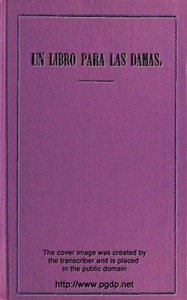
Un libro para las damas: Estudios acerca de la educación de la mujer
Let's clear something up first: this isn't a storybook. 'Un libro para las damas' (A Book for Ladies) is a manual. Published in 1893, it's a series of essays by María del Pilar Sinués, one of the most-read authors in Spain at the time. Think of it as the ultimate advice column for the 19th century Spanish woman, written by someone seen as an authority.
The Story
There's no plot in the traditional sense. Instead, Sinués builds a blueprint for the perfect woman. She covers everything from moral and religious instruction to practical duties in the home. Education is a major theme, but it's a very specific kind. She argues women should be educated to be better companions to their husbands and more capable mothers—to elevate the family, not themselves. Intellectual pursuits for their own sake? Dangerous. Careers outside the home? Unthinkable. The core 'story' is her effort to define and defend this separate, domestic sphere as women's highest calling.
Why You Should Read It
Reading this today is a trip. What's most compelling isn't just the rules themselves, but the person writing them. Sinués was a literary celebrity who made her living with her pen—hardly a confined domestic life. That contradiction hangs over every page. You read her passionate defense of the home, and you can't help but think, 'But you left yours to write this!' It makes the book a complex historical document. It's not just a list of old-fashioned ideas; it's a record of the arguments used to maintain a social order, written by a woman who both benefited from and was constrained by it. It gives you a direct line into the anxieties and ideals of an era.
Final Verdict
Perfect for readers who love history, sociology, or anyone fascinated by the roots of modern gender debates. It's not a light read, but it's a short and powerful one. You won't agree with it—you're not supposed to—but you'll understand a lot more about the world our great-great-grandmothers navigated. Pair it with a biography of Sinués for the full, ironic picture. It's a reminder that the past is never simple, and the voices from it are often full of surprising contradictions.
This text is dedicated to the public domain. Preserving history for future generations.
Elizabeth Lopez
1 year agoThe index links actually work, which is rare!




Barbara Martin
1 year agoI have to admit, the clarity of the writing makes this accessible. I couldn't put it down.