
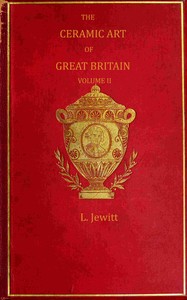
The ceramic art of Great Britain from pre-historic times down to the present…
Forget the dry title for a second. This isn't a stuffy catalog. Think of it as one man's lifelong treasure hunt. Llewellynn Jewitt, writing in the 1800s, sets out to do the impossible: document every significant piece of pottery made in Britain, from the earliest prehistoric urns to the fancy china on his own desk. The 'story' is the journey of discovery itself. He travels the country, peering into castle cellars, sketching artifacts in private collections, and interviewing old potters to save their knowledge before it's lost. The book is his field report, organized not just by date, but by the fascinating evolution of techniques, styles, and purposes.
Why You Should Read It
What grabbed me was the sheer passion. Jewitt isn't a detached scholar; he's excited. You can feel his triumph when he identifies a mysterious maker's mark or his frustration when a unique piece gets destroyed. He makes you see a common clay pipe as a personal object, smoked by a real person centuries ago. He connects the dots in a way that's surprisingly human – showing how the Industrial Revolution changed not just how pots were made, but how people lived. It’s history told through the things people held in their hands.
Final Verdict
This is a perfect read for anyone with a curious mind who loves history, antiques, or just a good detective story. It's especially great for local history buffs, as Jewitt often focuses on specific towns and their unique pottery traditions. Be warned, it's a product of its time (the 1800s), so the language is formal in places, but the curiosity at its heart is timeless. If you enjoy shows like The Antiques Roadshow or wonder about the hidden history in old buildings and fields, you'll find a kindred spirit in Llewellynn Jewitt.
The copyright for this book has expired, making it public property. Share knowledge freely with the world.
Robert Allen
1 year agoEnjoyed every page.
Mason Johnson
1 month agoI was skeptical at first, but the flow of the text seems very fluid. Truly inspiring.
Karen Gonzalez
10 months agoVery interesting perspective.
Andrew Hill
1 year agoEssential reading for students of this field.


Paul Martinez
7 months agoI had low expectations initially, however the arguments are well-supported by credible references. Don't hesitate to start reading.