
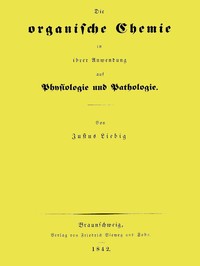
Die organische Chemie in ihrer Anwendung auf Physiologie und Pathologie by Liebig
Published in 1842, this isn't a book with a plot in the traditional sense. Think of it as a manifesto, a passionate argument for a new way of seeing the world. Justus von Liebig, one of the founding fathers of modern chemistry, lays out a simple but revolutionary premise: the functions of living organisms are not governed by some mystical 'vital force,' but by the same chemical laws that govern reactions in a laboratory.
The Story
Liebig structures his case like a lawyer before a jury. He starts by explaining the basic chemistry of organic compounds—things like fats, sugars, and proteins. Then, he applies these principles to physiology. He walks you through digestion, showing how food is chemically broken down. He explains respiration as a slow combustion process. Finally, he turns to pathology, suggesting that diseases might be understood as chemical imbalances or the presence of unwanted chemical products in the body. The entire book is his evidence, building a chain of logic to connect the lab bench to the living, breathing (and sometimes ailing) human body.
Why You Should Read It
What grabbed me was Liebig's voice. You can feel his conviction. He's not just presenting data; he's campaigning for a paradigm shift. Reading his clear, forceful explanations, you get a front-row seat to a moment when science changed everything. It makes you appreciate the sheer audacity of claiming you could explain life with test tubes and balances. While some of his specific theories were later refined or corrected (that's how science works!), the core idea—that biology is rooted in chemistry—is the foundation of modern medicine and nutrition. It's humbling to see that idea being forged.
Final Verdict
This book isn't for everyone. It's dense with 19th-century chemical terminology. But if you're a science history nerd, a student of biology or medicine curious about your field's origins, or just someone who loves seeing a brilliant, persuasive mind at work, it's a fascinating read. It's perfect for readers who enjoy 'origin story' nonfiction and want to understand the chemical worldview that shapes our lives. Don't expect a novel; expect to witness the birth of an idea.
No rights are reserved for this publication. Share knowledge freely with the world.
David Gonzalez
1 year agoFive stars!
John Ramirez
1 year agoI stumbled upon this title and the emotional weight of the story is balanced perfectly. A valuable addition to my collection.
Daniel Martinez
1 year agoIf you enjoy this genre, the author's voice is distinct and makes complex topics easy to digest. I will read more from this author.
Joseph Wright
1 year agoHelped me clear up some confusion on the topic.

Richard Lee
1 year agoClear and concise.