
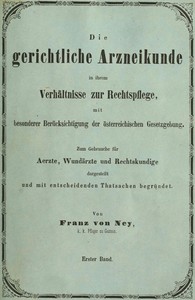
Die gerichtliche Arzneikunde in ihrem Verhältnisse zur Rechtspflege, mit…
Let's set the scene: Europe, 1840. Medicine is advancing, but the legal system? Not so much. Franz von Ney, a doctor, writes this book as a direct challenge. He's fed up. His core argument is simple and revolutionary for its time: judges and lawyers can't properly handle cases involving injury, death, or insanity without solid medical expertise. The book isn't a story with characters in the traditional sense. Instead, the 'plot' is von Ney building his case, brick by brick.
The Story
Von Ney structures his book like a lawyer presenting evidence. He walks you through different areas where law and medicine collide—poisonings, wounds, mental state, determining time of death. For each, he shows how traditional legal methods fail. He might describe a real case where a death was ruled natural, but a doctor would have spotted signs of arsenic. Or an instance where someone was declared 'insane' by a judge with no understanding of mental illness. The narrative tension comes from watching him systematically expose a broken system and demand that science gets a seat at the table. The climax is his passionate plea for 'gerichtliche Arzneikunde' (forensic medicine) to become its own respected, essential field.
Why You Should Read It
This book is a time capsule with a furious heartbeat. Reading it, you feel von Ney's frustration and his conviction. It makes you appreciate how far we've come—every DNA test and autopsy report traces back to arguments like these. But it also highlights timeless struggles: expertise versus tradition, and how slow institutions are to change. It's not a dry textbook; it's a polemic. You can almost hear his voice, earnest and urgent, trying to drag justice into the light of science.
Final Verdict
This is a niche read, but a fascinating one. It's perfect for history buffs who love seeing the roots of modern systems, true crime enthusiasts interested in the 'how' of old investigations, and anyone in law or medicine who wants a humbling look at their professional ancestry. It's not light bedtime reading, but for the right curious mind, it's absolutely gripping. You'll never watch a courtroom drama the same way again.
This content is free to share and distribute. Use this text in your own projects freely.
Kimberly Ramirez
8 months agoWow.
Thomas Walker
10 months agoFrom the very first page, the narrative structure is incredibly compelling. This story will stay with me.

Charles Martinez
1 year agoIf you enjoy this genre, the flow of the text seems very fluid. A true masterpiece.