
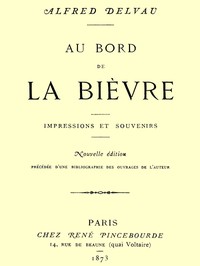
Au bord de la Bièvre: impressions et souvenirs by Alfred Delvau
Imagine putting on your most comfortable shoes and stepping back into Paris in the 1860s. But instead of heading for the Louvre or the Champs-Élysées, you turn down a narrow lane, following the faint smell of damp earth and hearing the quiet trickle of water. This is the journey Alfred Delvau invites you on in Au bord de la Bièvre.
The Story
There isn't a traditional plot. Think of it as a series of sketches, like pages from a wonderfully detailed diary. Delvau walks the banks of the Bièvre, a then-still-visible river that snaked through the Left Bank, powering mills and tanneries before being buried underground. He points out a crumbling wall, a hidden garden, a worn doorstep. With each observation, he spins out a memory or a piece of local lore. He tells us about the washerwomen who once gossiped there, the lovers who met on a certain bridge, the workers whose lives were shaped by the river's flow. The 'story' is the river itself—its past, its slow vanishing, and the quiet life persisting along its edges.
Why You Should Read It
This book is a masterclass in paying attention. Delvau has this incredible eye for the small things that make a place feel alive. He isn't just describing buildings; he's capturing a mood, a sense of time passing. What really got me was his voice. He writes with the warmth of a local showing you his favorite haunts, mixed with the melancholy of someone who knows these scenes are fading. You feel his genuine affection for the cobblers, the wine merchants, and the stray cats—the whole unofficial cast of characters in this corner of Paris. It makes you want to look at your own city with that same curious, tender eye.
Final Verdict
Perfect for history buffs who prefer alleyways to palaces, for flâneurs-at-heart, and for anyone who believes the soul of a city is found in its overlooked corners. It’s also a beautiful, slow read for a lazy afternoon. If you need a fast-paced thriller, look elsewhere. But if you’re in the mood for a thoughtful, poetic ramble through a lost Paris with a charming and observant companion, Delvau is your man. This book is a quiet treasure.
This masterpiece is free from copyright limitations. You can copy, modify, and distribute it freely.
George Sanchez
4 weeks agoFast paced, good book.
Sandra Hernandez
5 months agoClear and concise.
Thomas Scott
1 year agoThis book was worth my time since the emotional weight of the story is balanced perfectly. I will read more from this author.
Aiden Lewis
2 years agoSurprisingly enough, the storytelling feels authentic and emotionally grounded. Thanks for sharing this review.







Oliver Williams
1 year agoLoved it.